No. 01 · The academy
What we built, and why we built it.
Cochabamba Jiu-Jitsu + MMA is a small, family-run academy in Olney, Maryland. We teach kids real skills and give them a place to belong.
The name
Why is the academycalled Cochabamba?
Cochabamba starts with family.
The name comes from Cochabamba, Bolivia, where Brian Guevara’s family comes from. Brian was born and raised in Montgomery County, Maryland, and wanted the academy to represent both where his family came from and the community that raised him.
The goal was never simply to open another martial arts school.
Cochabamba was built to create something meaningful in the community Brian grew up in: a place where kids could receive opportunities, mentorship, high-level training, and an environment that teaches them how to better understand and control both their emotions and their physical abilities.
The name connects where the family came from with where the next generation is being built.
Our roots
Two roots.One name.
01
Cochabamba, Bolivia
Where our family comes from.
02
Olney, Maryland
Where we come from.
03
Cochabamba MMA
What we're building for the generation after us.
Why here
Built from our roots.Built for our community.
Cochabamba represents where our family came from.
Olney and Montgomery County represent where we grew up.
Our founder was born and raised here. This community shaped his childhood, his relationships, and eventually the place he chose to build Cochabamba.
The goal was never simply to open another martial arts school.
It was to create the kind of environment we believe young people in our community deserve: one built around genuine development rather than promises, pressure, or gimmicks.
A place where kids can experience challenges in a safe environment. Where they learn how to engage rather than retreat, how to control their physicality rather than be controlled by it, and how to understand and regulate their emotions when things become difficult.
Because grappling gives kids something incredibly valuable: a place to experience pressure, and learn what to do with it.
- They will get frustrated.
- They will lose.
- They will succeed.
- They'll encounter people who are stronger, faster, more experienced, and different from them.
And through those experiences, they begin learning something much bigger than grappling.
How to stay in controlwhen things aren't.
That's what we want to give back to the community that raised us.
Not just better grapplers.
More capable young people.
The symbol
Why the toad?
The toad represents something people tend to overlook.
Frogs and toads aren’t usually viewed as intimidating animals, but some possess incredible survival abilities and defenses capable of stopping much larger threats.
That idea became symbolic of Cochabamba.
Never underestimate something because of how it looks, where it came from, or where it started.
Cochabamba itself started small: in a basement.
- No massive facility.
- No established name.
- No huge team.
Just an idea, a small group of kids, and a belief in what the training could become.
As the academy grew, the toad became a representation of those athletes as well:
Small doesn’t mean weak.
Unknown doesn’t mean incapable.
And where you start doesn’t determine where you can go.

Behind the toad
The Jiraiya philosophy.
There’s another influence behind the toad: Jiraiya from Naruto.
But it isn’t simply because Jiraiya is associated with toads.
It’s the philosophy behind his story.
Jiraiya became an accomplished and respected ninja himself, but one of the most important parts of his legacy was ultimately developing people who could surpass him.
That idea became part of the philosophy behind Cochabamba.
The goal of a great coach shouldn’t be to remain the greatest person in the room forever.
The goal is to create students who eventually become better than you.
Brian’s goal isn’t for Cochabamba’s story to end with his own accomplishments.
It’s to give the next generation better coaching, better information, better opportunities, and a stronger environment than the generation before them had.
Eventually, the students should take everything their coaches have learned and push it further.
That’s the legacy we’re trying to build.
How we train
A different approachto grappling.
Cochabamba doesn’t rely heavily on the traditional model of martial arts instruction.
Rather than having athletes spend most of practice memorizing long sequences of techniques or repeatedly drilling movements without resistance, our training is built around live problem-solving and constraints-led learning.
Coaches create situations, objectives, boundaries, and problems that athletes must solve against another person who is actively trying to accomplish their own objective.
That changes the role of the coach.
We’re not simply giving athletes answers.
We’re teaching them how to find answers.
Athletes learn to recognize opportunities, manage distance and pressure, control another person’s movement, make decisions under resistance, adapt when something fails, and remain composed while solving problems in real time.
This is especially important with children.
We want them to understand why something works, not simply memorize what they’re supposed to do.
The result is an environment where learning and live grappling aren’t treated as two completely separate things.
The grappling itself becomes the classroom.
Where it started
The original kids.
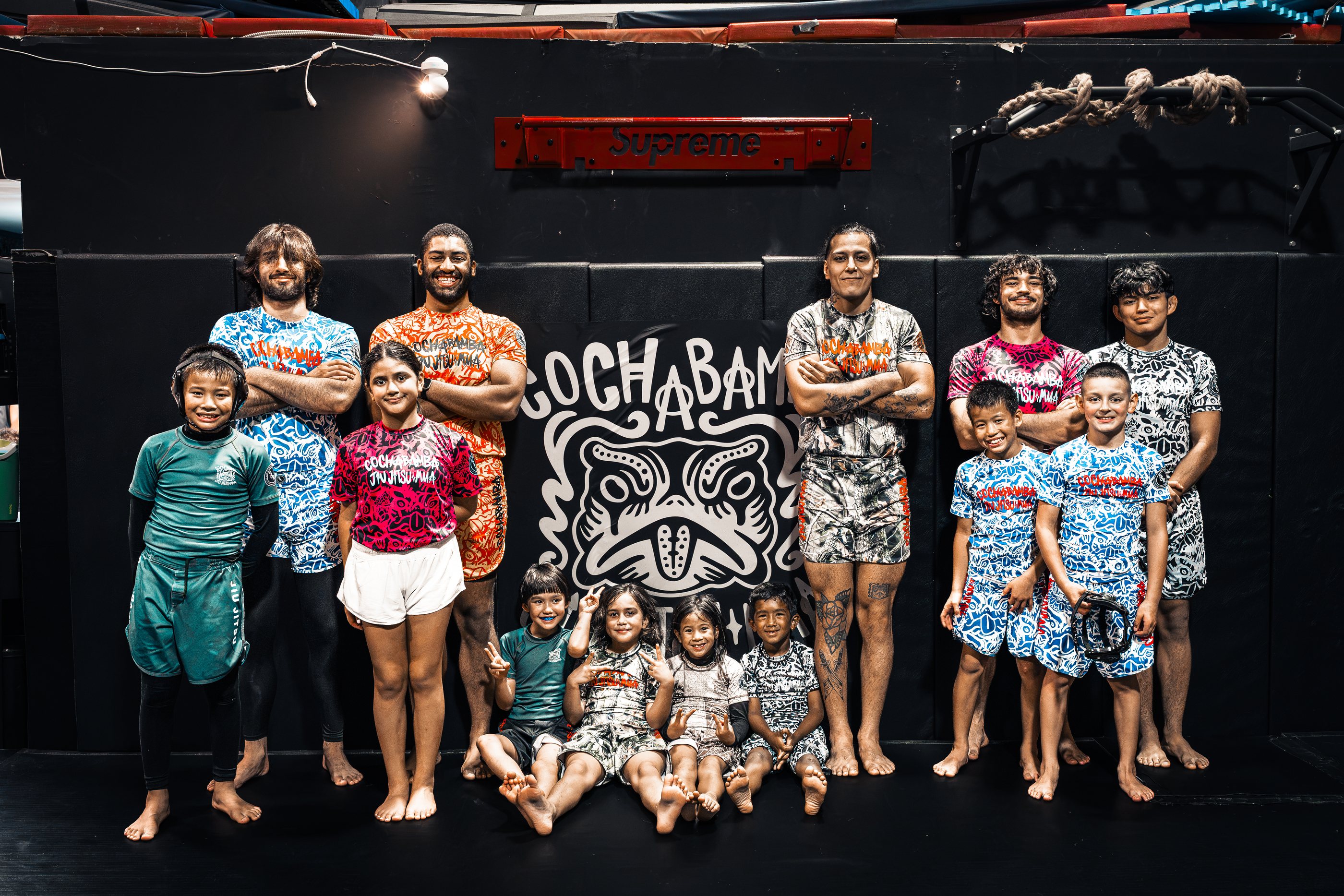
Before the academy had the number of students it has today, before the larger facility, before the competition team traveled, and before Cochabamba became what families see now, there was a basement.
A small group of kids trained there while the academy was still an idea being built in real time.
Those original students are an important part of Cochabamba’s story because they grew alongside the academy.
- There wasn’t an established reputation to join.
- There wasn’t a polished facility.
- There wasn’t years of proof showing what the program could produce.
Their families believed in the process before there was much to point to besides the work itself.
As the academy grew, those early students helped establish the culture that newer athletes would eventually walk into.
They represent where Cochabamba started and are a reminder that everything here was built one athlete, one family, and one training session at a time.
The competition chapter
From a basementto bigger stages.
Competition eventually became an important chapter in Cochabamba’s development.
Not because every child who walks through our doors needs to compete. They don’t.
But for the athletes who decide they want to test themselves, we take that decision seriously.
What began with local tournaments has expanded into athletes traveling to compete at larger events and organizations, including IBJJF, ADCC events, UFC BJJ events, and other high-level competitions.
The objective isn’t simply collecting medals.
Competition gives our athletes a place to test whether what they’re learning actually holds up against unfamiliar opponents, different styles, pressure, and increasingly difficult levels of competition.
As our athletes improve, the stage should grow with them.
- 01Local competition can lead to regional competition.
- 02Regional competition can lead to national competition.
- 03And national competition can eventually create international opportunities.
For athletes who want that path, Cochabamba intends to help them build a legitimate competitive résumé and pursue increasingly difficult opportunities.
But the bigger story isn’t simply where we compete.
It’s who eventually represents Cochabamba there.
The academy started with a coach trying to build something different for a handful of kids.
The long-term goal is for those kids, and the generations that follow them, to take the name much further than the person who started it ever could.
That’s the Cochabamba story.
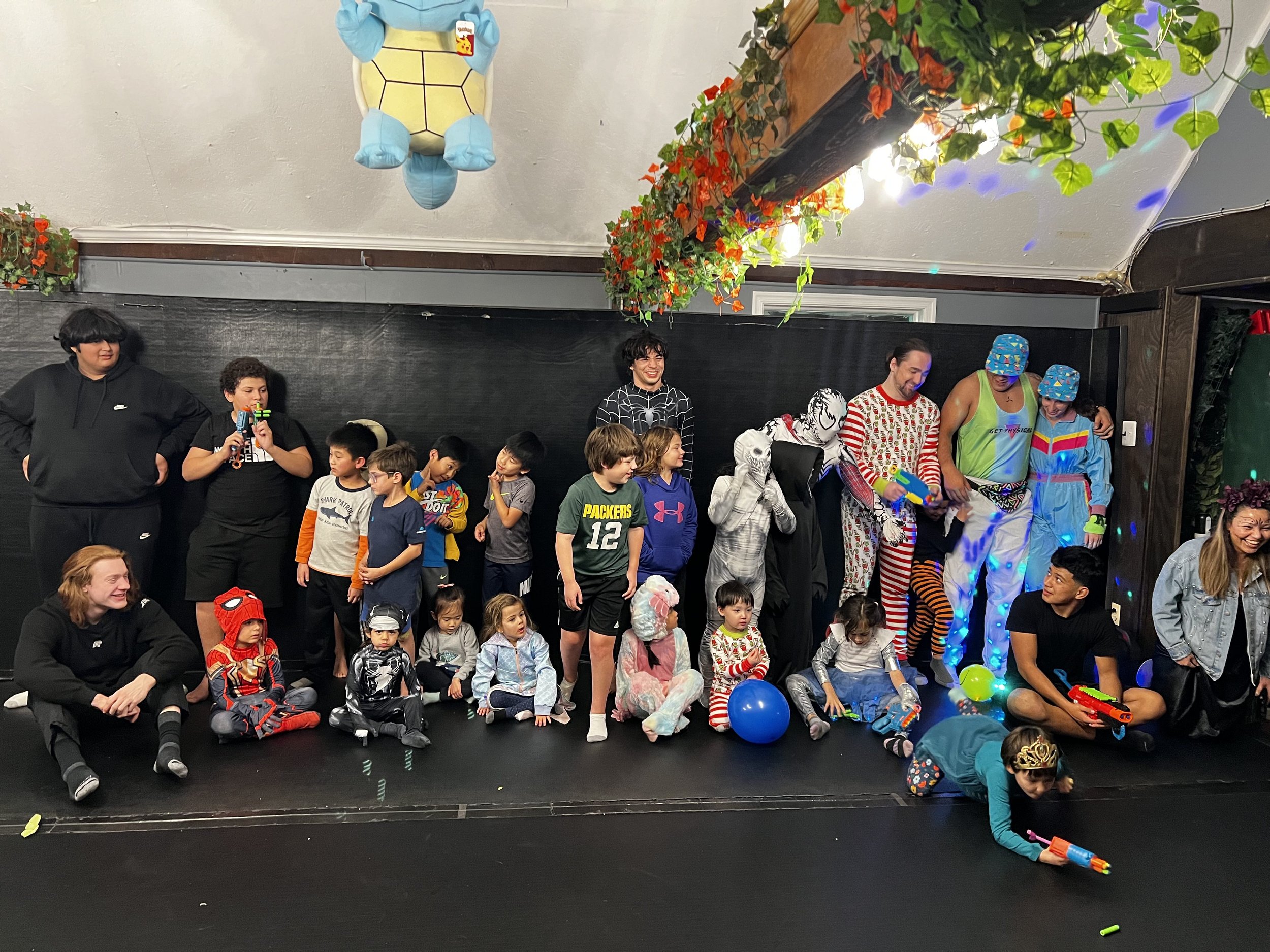
A second home.
Not because we put those words on a wall.
Because the people inside made it one.
No. 01.a
The mission
We use martial arts to give kids real skill and real confidence that stays with them long after class.
Cochabamba Jiu-Jitsu + MMA is built on a simple idea. A kid who knows how to handle themselves carries that into the classroom and everywhere else.
We combine Kickboxing, Wrestling, and Submission Grappling because real situations don't pick a discipline. Our students learn all of it, and they learn when each one applies.
No. 02 · What sets us apart
Four thingswe don't bend on.
- 01
Children-first focus
Our programs are built for kids. The technique fits the age, the intensity fits the age, and the room feels safe before it feels demanding.
- 02
Three disciplines, one curriculum
Kickboxing, Wrestling, and Jiu-Jitsu taught as one skill set. Students learn how striking, takedowns, and ground work fit together.
- 03
Instructors who still compete
Our coaches still train and compete. What goes on the board this week got tested in a real match recently.
- 04
Community before clientele
Families know each other. Kids cheer for their classmates. The room is small on purpose. We'd rather have a hundred regulars than a thousand names on a roster.
No. 03
The house rules.
Short version, in five lines. The full member policy lives on its own page.
Read the full policy →- Attendance
- Show up regularly. Twice a week is the minimum that really pays off.
- Conduct
- Respect the instructors, the room, and the people next to you. Bullying gets you sent home.
- Safety
- Follow safety calls, use the gear we ask you to, no rough play outside of training.
- Parents
- You're welcome to watch any time. Encouraging the work at home matters more than you think.
- Equipment
- We provide what you need for trial classes. Members buy their own rash guard and gear when they're ready. No gi, ever.
The basementwas just the beginning.
We're proud of where Cochabamba started.
We're even more excited about where these kids are taking it.
Because from the beginning, the goal was never to create students who simply followed the generation before them.
The goal was to prepare the generation that goes further.